

FESPA Global Print Expo set to deliver on several levels
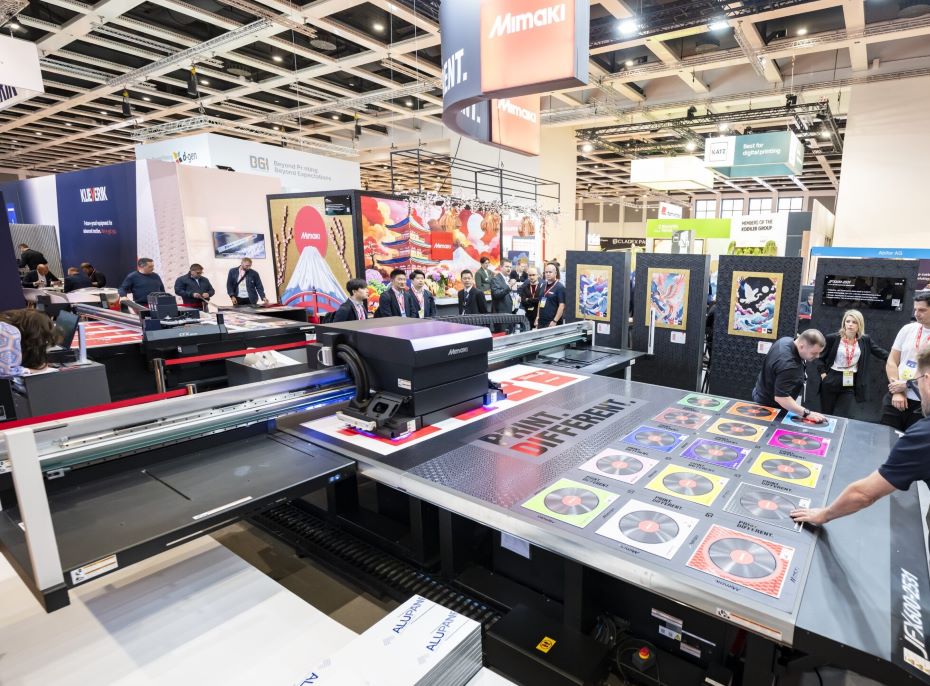
Today (Tuesday 19th May) the doors of the impressive Fira de Barcelona exhibition space, officially open for FESPA Global Print Expo 2026 and its six co-located events and the event promises to deliver to the ANZ market on multiple levels.
The six co-located events are FESPA Global Print Expo, European Sign Expo, Personalisation Experience, WrapFest, Corrugated and Textile. The event also sees three separate conference programs in The FESPA Conference, The Corrugated Conference and WrapTalks, as well as two live World Wrap Masters Competitions – World Wrap Masters Europe (19-20 May) followed by the World Wrap Masters Final (21-22 May).
With all this peripheral activity supporting the event, FESPA Global has steadily grown over time to now be recognised as one of the most strategically valuable events on the international print calendar. The technologies launched and demonstrated at FESPA typically reach local markets 12–24 months later, making the event a strong forward indicator of investment priorities. With key themes, such as AI, automation, sustainability, and application diversification likely to impact much more quickly.
Statistically speaking
For those Aussies and Kiwis who have made the trip over, FESPA Global organisers will reliably inform you that you have the opportunity to view the wares of over 550 exhibitors and that you will be a small, but important number amongst the >14,000 international visitors expected from over 125 different countries.
These statistics reflect a continued upward trend in numbers across the board, but importantly, it is the quality of those attending that is still expected to remain high, with an estimated 87% of delegates predicted to be holding decision-making roles and/or budgets allocated for technology upgrades.
So while the event is smaller in scale than global mega-shows like drupa, its strength lies in delivering a concentrated audience of buyers specifically focused on wide-format, textile, and specialty applications. This 2026 edition builds on that strength too, with the integration of the new verticals listed above – particularly with regards to Corrugated Packaging and Textile Printing sectors, reflecting strong diversification within our industry.
Michael Ryan, Head of FESPA Global Print Expo, says: “This is clearly our biggest showcase yet and each year, we strive to offer our visitors something new. Our three conference programmes will do just that and we’re confident that the programmes will facilitate knowledge sharing among our visitors, while giving them a platform to learn, network and maximise their business growth.”
Dominance of major hardware manufacturers
At the core of the exhibition is a strong presence of global OEMs driving innovation in wide-format and industrial print. Major players such as HP, Canon, Epson, Brother, Agfa, Durst, EFI, Mimaki, Mutoh, and Roland DG will showcase next-generation inkjet platforms.
For ANZ markets – where demand for versatile, mid-to-high volume wide-format systems is strong – these exhibitors are highlighting advancements in UV-LED, latex, and resin-based printing. Key themes include higher throughput, lower energy consumption, and expanded substrate compatibility, especially for rigid signage, soft signage, and décor applications. Hybrid flatbed/roll-to-roll systems and compact industrial printers will be particularly relevant to Australian PSPs seeking flexible production without large factory footprints.
Signage, display and vehicle wrapping technologies
The co-located European Sign Expo and WrapFest elevate the importance of signage and vehicle graphics. Materials leaders such as 3M, Arlon Graphics, Avery Dennison, Hexis, and Antalis will present new adhesive films, laminates, and sustainable substrates.
For vehicle wrapping specialists, WrapFest exhibitors is set to emphasise faster-installation films, air-release adhesive systems, and improved conformability for complex curves – critical for reducing labour costs in markets like Australia where skilled installers are in short supply. Sustainability is also a key trend, with PVC-free films and recyclable liner technologies gaining traction.
Finishing, cutting and automation systems
Finishing remains a critical differentiator for print businesses, and FESPA 2026 features leading cutting and workflow automation providers such as Kongsberg Precision Cutting Systems, Zünd, Summa, and Morgana Systems.
These companies are demonstrating integrated finishing lines that combine cutting, creasing, routing, and robotic handling. For ANZ converters and signmakers, the emphasis on automation and reduced manual intervention is particularly relevant given ongoing labour constraints and rising operational costs.
Software, workflow and personalisation platforms
A major growth area across the exhibition is workflow automation and software integration. Exhibitors including Caldera, Onyx Graphics, Enfocus, Dataline, and XMPie will showcase solutions for colour management, job onboarding, and end-to-end production workflows.
For the ANZ market—where many print businesses are transitioning from traditional production to web-to-print and short-run digital, these technologies are crucial. The strong focus on cloud-based platforms, API-driven integration, and AI-assisted production planning, is all aimed at improving efficiency and enabling scalable personalisation services.
Textile, garment and industrial print
The introduction of the Textile Pavilion and expanded garment decoration offering brings exhibitors such as Kornit Digital, M&R Companies, and Tajima Industries into focus.
Direct-to-garment (DTG), direct-to-film (DTF), and roll-to-roll textile systems are being showcased everywhere, with improved ink formulations, faster curing, and enhanced colour vibrancy. These technologies align with the growing demand in Australia and New Zealand for on-demand apparel, custom merchandise, and short-run textile production.
Emerging applications: corrugated, décor and industrial print
The addition of corrugated and industrial print segments reflects the diversification of the print industry beyond traditional graphics. Exhibitors will present digital solutions for packaging, interior décor (via the Printeriors feature), and specialty industrial applications.
For ANZ businesses looking to diversify revenue streams, these areas present significant opportunity, particularly in short-run packaging, customised interiors, and printed building materials.
Key takeaways for ANZ visitors
Overall, FESPA 2026’s exhibitor base highlights three major technology directions:
Automation and workflow integration to address labour shortages and improve margins
Sustainable materials and energy-efficient printing in response to regulatory and client demands
Versatility in production, with hybrid devices and multi-application capabilities
For signage, vehicle wrapping, industrial printing, and graphic arts businesses across Australia and New Zealand, the show offers a clear view of where investment should be directed: highly automated, flexible systems paired with advanced software and environmentally responsible consumables.



Most read
- Triple EDP award win for Mimaki
- HP Inc. and manroland Goss sign reseller agreement for Digital Finishing Systems
- Fujifilm to cease sales of Acuity Prime and Acuity Ultra products
- New HP Printer series for busy enterprise environments
- Spicers announces plans to acquire Spandex Australia
- New MD for Fujifilm Business Innovation Australia