
Global Inkjet Market set to reach USD$177bn by 2031
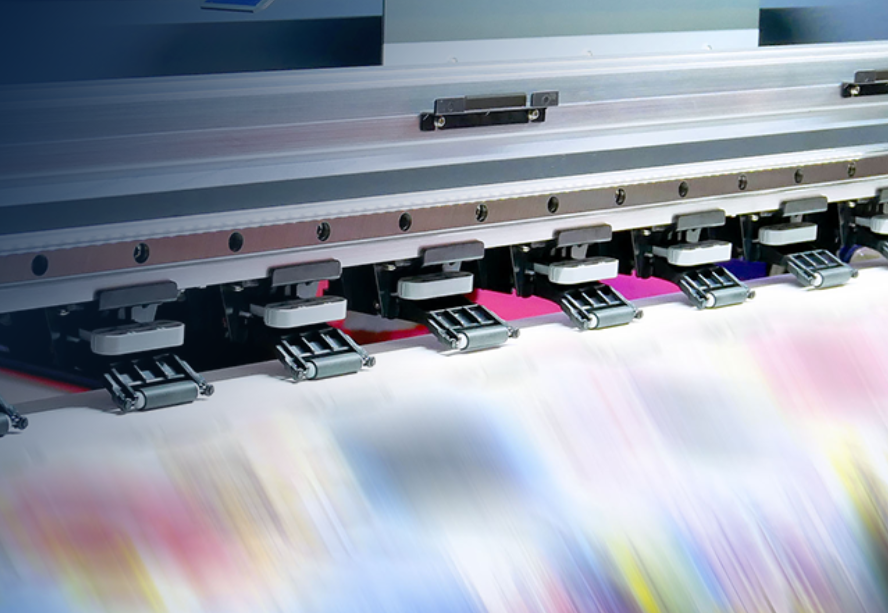
Captured in a new report titled The Future of Inkjet Printing to 2031, the latest research from Smithers – well-recognised as a global authority on the printing industry – predicts that the combined value of the global graphic and packaging inkjet market (currently USD$101.1bn) plus the value of the smaller functional and industrial market (currently USD$29.2bn) will grow at 9.4% CAGR and 6.9% CAGR in value and volume respectively predicting the combined industry value to rise to USD$177bn by 2031.
China and India are at the centre of this paradigm shift, with Asia Pacific fast emerging as the dominant force in global inkjet, drawing level with North America in volume by 2026 and overtaking it across all metrics by 2031.
Within end-use segments, the report finds packaging and labels are posting the highest growth rates as e-commerce, population growth and demand for short-run personalised print drive investment. Books and labels are among the fastest-growing applications, while advertising print and transactional output continue to decline. The resilience of packaging during the Covid-19 pandemic underlined its importance as a growth anchor for the wider industry.
Meanwhile, the research shows that Sustainability is reshaping the $9.9bn ink market, with water-based formulations gaining ground across all segments, including textile, corrugated and commercial print, and advancing rapidly into packaging, where food-contact migration regulations and recyclability requirements are accelerating the transition away from solvent-based alternatives. Print-on-demand capability is also positioning inkjet as a tool for reducing overproduction and inventory waste. Radiation-cured technology is also an important and fast-growing technology for inkjet in advertising, commercial printing and labels. There is a notable transition underway from conventional UV to LED-UV, which offers lower energy consumption and reduced heat output, a meaningful benefit when printing on heat-sensitive substrates.
Equipment development is moving decisively towards purpose-optimised machines. Rather than general-purpose platforms, manufacturers are developing presses engineered for specific applications, with proprietary print head technology increasingly central to that strategy. HP, Epson, Konica Minolta, Ricoh, Kodak and now Canon and Domino (via Brother) all produce their own heads, giving them tighter control over system performance and total cost of ownership. So whilst fewer units are being sold, there is higher productivity per machine, a trend already visible in wide-format graphics where older, lower-output devices are being consolidated.
Finally, AI and automation are closing the cost gap between inkjet and analogue production. Predictive maintenance, AI-driven diagnostics, inline inspection and fleet management software are extending uptime, reducing waste and improving total cost of ownership. Generative AI is also entering the origination workflow, enabling unique imagery to be produced at commercial scale. By 2031, these capabilities are expected to be standard across the installed base.
The net effect of all this is that inkjet printing has steadily become one of the most consequential technologies in global manufacturing and communications. The combined effect of supply chain realignment, evolving print procurement models and continuous technology development has positioned inkjet at the forefront of innovation and commercial growth across the global print market. What’s more, aspects of this latest The Future of Inkjet Printing to 2031 Smithers report also suggest that inkjet’s most disruptive phase may still lie ahead.




Most read
- Triple EDP award win for Mimaki
- HP Inc. and manroland Goss sign reseller agreement for Digital Finishing Systems
- Fujifilm to cease sales of Acuity Prime and Acuity Ultra products
- New HP Printer series for busy enterprise environments
- Spicers announces plans to acquire Spandex Australia
- New MD for Fujifilm Business Innovation Australia