
Mutoh flags ‘the real DTO opportunity’
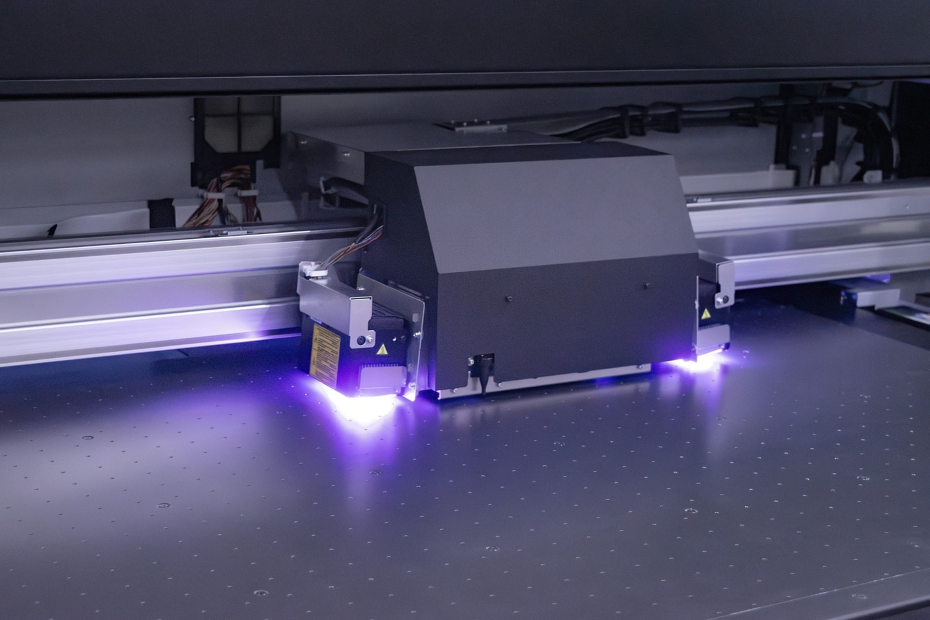
Direct-to-Object (DTO) printing is quickly emerging as one of the most commercially attractive segments of the wide-format and specialty print market- not because it is complex, but because it is surprisingly simple to implement while delivering consistently high margins. At the centre of this shift is Mutoh, whose latest generation of UV flatbed technology is helping printers of all sizes unlock new revenue streams with minimal operational friction.
Russell Cavenagh, Managing Director of Mutoh Australia, says: “DTO printing essentially removes the need for transfer media, screens, or labels by printing directly onto finished products. That single change has profound implications: reduced labour, faster turnaround, less waste, and the ability to profitably produce one-off or short-run customised items. In an era where personalisation commands premium pricing, DTO therefore becomes a natural margin generator.”
Mutoh’s flagship response to this opportunity is the XpertJet 1462UF, a mid-size UV-LED flatbed designed specifically to balance productivity with ease of use. With a generous 1420 x 700mm bed, the ability to print on objects up to 150mm thick, and support for materials weighing up to 50kg/m², it opens the door to an exceptionally wide application range- from phone cases and promotional items to industrial panels and signage.
High margins, low complexity
Cavenagh adds: “What makes this platform particularly compelling is its production efficiency without added complexity. The staggered dual printhead configuration allows simultaneous printing of CMYK, white, and varnish layers in a single pass, meaning textured or multi-layer prints can be produced without slowing throughput. This is critical for profitability: more value-added output, no additional labour input.”
Speed and productivity further reinforce the margin story. The XpertJet 1462UF can print multiple items simultaneously – such as batches of A3 sheets in approximately 15 minutes – maximising output per square metre of floor space. For many print providers, this translates into the ability to produce hundreds of small, high-margin items per hour, a revenue model far removed from traditional commodity print.
Just as important is how accessible the technology has become. Mutoh has engineered the platform for ease of operation, with features such as automatic media thickness detection, real-time nozzle checking (even with jigs in place), and intuitive workflow software. Cavenagh points out: “This means operators do not need extensive technical expertise to achieve consistent results – lowering the barrier to entry for new businesses and reducing training costs for established operations.”
From ‘garage’ start-up to industrial scale
For smaller operators or those entering the market, Mutoh’s ecosystem provides a clear pathway. Entry-level UV flatbeds like the XpertJet 661UF allow production to begin in compact environments – home workshops, retail spaces, or small studios – while still offering advanced features such as layered printing and textured output. From there, businesses can scale into larger platforms like the XpertJet 1462UF as demand grows, maintaining continuity in workflow and technology.
This scalability is one of DTO’s greatest strengths. A start-up can begin with relatively modest investment, targeting niche products such as customised gifts or branded merchandise, and quickly move into higher-volume production as customer demand builds. Because setup times are minimal and there are no plates or screens to produce, jobs can be turned around quickly and priced at a premium, accelerating return on investment.
Cautionary note
However, DTO is not without its pitfalls. Success depends heavily on application selection and material handling. Ink adhesion can vary across substrates, requiring testing and process control, while inconsistent surfaces or poor jigging can impact print quality. Environmental factors—temperature, humidity, and cleanliness—also play a role in achieving consistent output.
Cavenagh says: “All these challenges are manageable, and importantly, they are outweighed by the upside. Mutoh’s development of next-generation UV inks, including formulations designed to be safer for operators and compatible with a wide range of materials, further reduces risk while expanding application potential.”
“Ultimately, DTO printing represents a shift in mindset as much as technology. It is not about replacing existing production, but augmenting it with high-value, flexible output that fills gaps, smooths workflow, and captures new markets. For commercial printers, it offers a way to diversify beyond price-driven work. For start-ups, it provides a viable entry point into manufacturing-led print.”
With platforms like the XpertJet 1462UF, Mutoh has positioned itself at the forefront of this transition – delivering a solution that combines industrial capability, operational simplicity, and strong profit potential. In a market where margins are under pressure, DTO stands out as a rare opportunity where less complexity genuinely leads to more profit.




Most read
- Triple EDP award win for Mimaki
- New HP Printer series for busy enterprise environments
- HP Inc. and manroland Goss sign reseller agreement for Digital Finishing Systems
- Fujifilm to cease sales of Acuity Prime and Acuity Ultra products
- Spicers announces plans to acquire Spandex Australia
- New MD for Fujifilm Business Innovation Australia