

Koenig & Bauer focused on IMPACT in new strategy
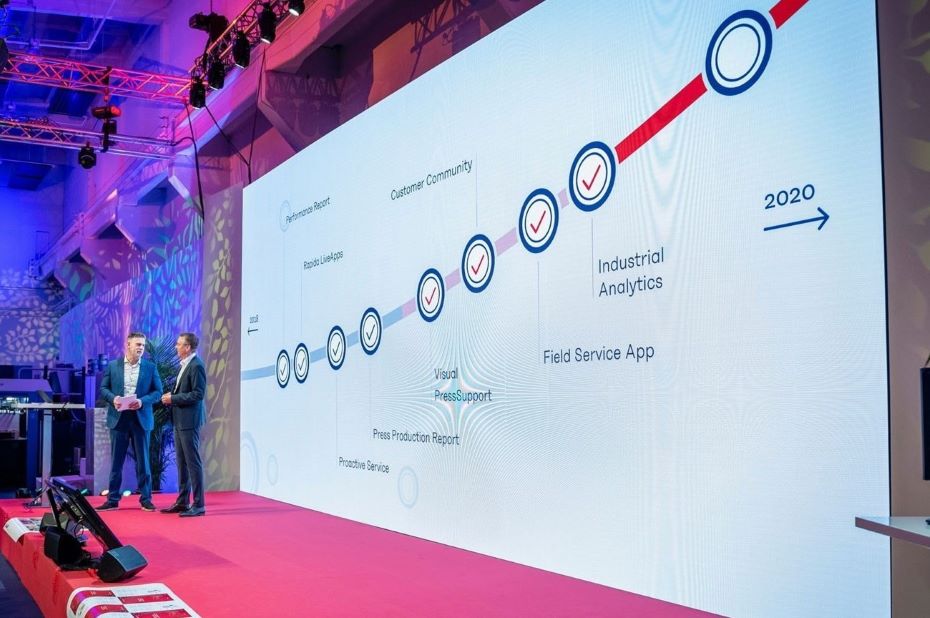
Koenig & Bauer has presented its new strategic framework, designed to drive its transformation from a traditional manufacturer to a complete technology provider.The new framework, called simply ‘IMPACT’, aims to build on the success of its 2021-25 ‘Exceeding Print’ strategy.
Dr. Stephen Kimmich, CEO of Koenig & Bauer, says: “In challenging times, we do not rely on the markets to calm down, but actively shape the future of our industry. The market data shows us the door: we have to walk through it ourselves. Koenig & Bauer is acting decisively, innovatively, and in the interest of the sustainable success of our customers.”
As part of the new strategy, the company said it is now realigning its priorities for the coming decade to actively shape the challenges of the volatile global economy and to continue making a significant contribution to the success of its customers worldwide. It said the individual letters of the word IMPACT each represent a strategic pillar: Intelligence, Market, People, Adaptability, Competitiveness, and Technology, which together form the backbone of its new strategic framework.
The business said it is holistically integrating AI into its processes and products, particularly through its already established ‘AI Empower’ programme, with the focus on increasing the efficiency of its own operations through software, AI, and automation, while simultaneously creating digital ecosystems for customers, such as myKyana.
The business is also focusing on the rapid scaling of its product portfolio and said a key growth driver is the targeted development of global growth markets such as Asia, India, Latin America, and the Middle East.
The company said it is also expanding its range with “suitable product variants” to gain market share in the high-volume and price-sensitive mid-tech segment as well.
Meanwhile, to increase its resilience against global economic fluctuations, Koenig & Bauer said it is adjusting its value chain and moving away from rigid capacity limits towards a flexible model alongside stable base utilisation of its own plants.
“This is complemented by local procurement and assembly strategies to reduce dependencies in the supply chain. Furthermore, the profitable service business, which already accounts for around 30% of group revenue, acts as a strong financial anchor and will be consistently expanded further,” the company stated.
In light of global cost pressure, new tariff barriers, and intense competition, the business said it is also working ‘with the highest priority’ on optimising its manufacturing costs.



Most read
- Triple EDP award win for Mimaki
- HP Inc. and manroland Goss sign reseller agreement for Digital Finishing Systems
- Fujifilm to cease sales of Acuity Prime and Acuity Ultra products
- New HP Printer series for busy enterprise environments
- Spicers announces plans to acquire Spandex Australia
- New MD for Fujifilm Business Innovation Australia